Echoes of Granite: A Journey Across the Arctic Lofoten
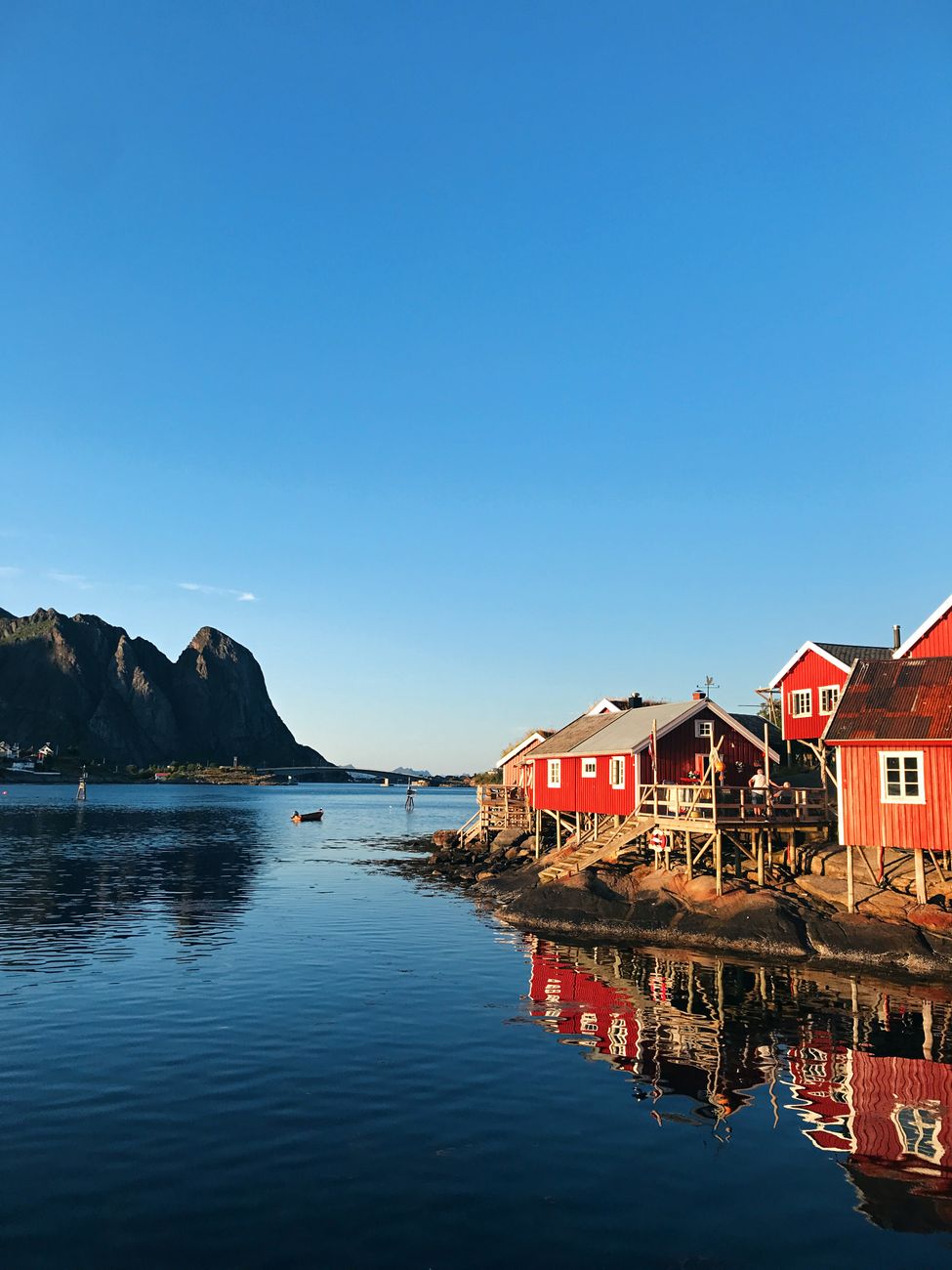
North of the Arctic Circle, the archipelago of Lofoten stretches like a jagged spine into the Norwegian Sea. Here, sheer walls of Precambrian gneiss plunge thousands of meters directly into cold, dark fjords. For centuries, travelers and mariners have spoken of this territory as a sanctuary where geography commands immediate humility.
The Geometry of the Rorbuer
Our base for five days was Reine, a collection of tidal skerries anchored together by narrow stone bridges. The traditional red fishing cabins—the rorbuer—stand elevated on wooden stilts over the tide. Built originally to house migratory fishermen hunting skrei (Arctic cod) during the brutal winter months, their timber walls creak in cadence with the gusting Atlantic gales.
“To travel here is to realize that light is not merely illumination, but a physical material that reshapes mountains hourly.”
The Quiet Rhythm of Skrova
Leaving the main highway behind, we chartered a ferry to Skrova, an islet home to barely two hundred residents. Outside the harbor, no engines run. Walking the coastal path through heather and bog moss, one hears only the dry calls of kittiwakes and the rhythmic surge of surf against granite shelves.
- Best Season: September to November for balanced golden hours and early aurora borealis.
- Transport: Regional coastal ferries and local bicycles allow an unhurried, low-impact presence.
- Culinary Note: Fresh Atlantic cod served with root vegetables and churned salted butter.
As darkness settled over the fjord, clouds parted to reveal the emerald ribbons of the northern lights dancing across the summit of Reinebringen. Standing beneath that celestial expanse, one is reminded why undisturbed wilderness remains essential to human well-being.